Stick Tuber: Punch Fight Dance
- 3.2
- Rating
- 5.00M
- Installs
- Free
- Price

 Analysis by App-foxy
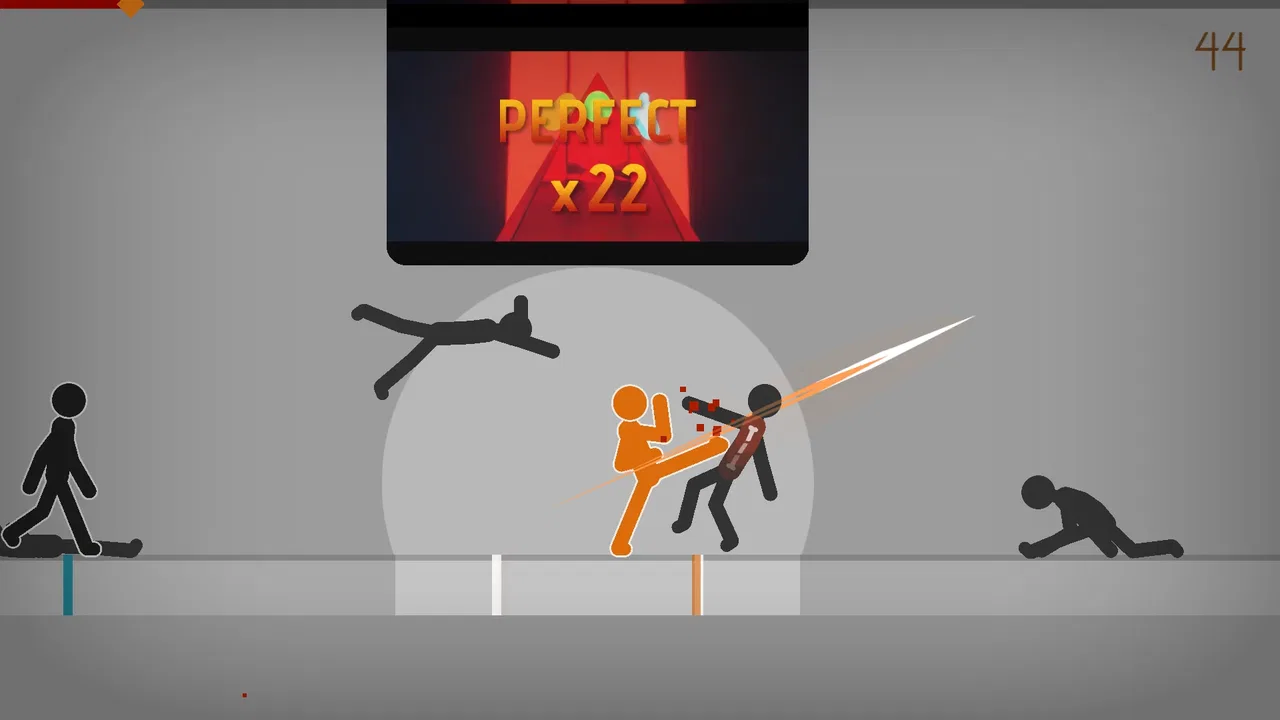
I went into Stick Tuber: Punch Fight Dance expecting a simple rhythm game with stick-figure action, and that is exactly where its appeal lies. The game puts timing and fighting together instead of treating music as background decoration. Enemies appear as part of an action sequence, and my job is to respond to the beat while keeping the stick character moving through the encounter.
That combination makes it easier to understand than a traditional music game, but it also gives the experience a different rhythm. I am not only listening for a note or tapping through a song chart; I am watching the fight, reading the timing, and trying to keep the action from falling apart. It is a free music game from Skygo, aimed at Teen players, and it works best when I want short, energetic sessions rather than a deep competitive rhythm experience.
How the first sessions establish the game’s goals
The early appeal comes from the clarity of the objective. The store summary describes a stickman fighting enemies along with the rhythm of music, and in practice that idea gives each encounter an immediate purpose. I do not need a long explanation to understand what I am trying to do: follow the musical flow and help the character overcome the opponents in front of him.
You May Also Like

 Blood Strike: 2.5 Anniversary
Blood Strike’s Loadouts Turn Every Drop Into a Tactical Gamble
A close look at Blood Strike’s custom loadouts: how fast access to signature weapons reshapes its battle royale rhythm, rewards preparation, and narrows the gap between fights.

 Pandora - Music & Podcasts
Pandora’s Music Is Easy to Start, but Harder to Recover
Pandora’s strength is its low-effort path from a seed to a station. Its weak spot is how much confidence it asks you to place in connection, setup, and quiet recovery.

 8 Ball Pool
 Is Built on Rivalries, Rematches, and Routine
A close look at the rivalries, rematches, shared routines, and unanswered safety questions that turn a quick pool match into a persistent mobile community.

 Samsung Music
’s Quiet Strength Is Playing What You Already Own
Its reach comes less from spectacle than from dependable access to a personal library. That simplicity is both the app’s strongest retention engine and its ceiling.

 AccuWeather: Weather Radar
AccuWeather Review: A Quick, Clear Forecast for Everyday Decisions
For everyday plans, the best forecast is the one you can understand quickly. AccuWeather makes rain timing, radar, and local conditions easy to act on, with a few trade-offs.

 Hill Climb Racing
Why Hill Climb Racing Still Turns Crashes Into One More Run
A tiny car, a bumpy hill and one more upgrade: Hill Climb Racing keeps resurfacing because its simple chaos makes every near-miss feel personal.
More From Our News Desk



That simplicity is useful on a phone. I can start playing without first learning a complicated menu structure or a large collection of systems. The visual language is also direct. Stick figures keep the screen readable, while the musical timing gives the action a recognizable pulse. The result feels more approachable than a conventional fighting game and less abstract than a pure tap-to-the-beat title.
The first goals are therefore about building a basic relationship with the game: hear the rhythm, watch what is happening, and react consistently. I found that this made the opening experience friendly for people who enjoy casual action but do not normally play rhythm games. Someone can understand the premise almost immediately, even if better timing still takes practice.
There is a trade-off here. Players who want a detailed combat system may find the opening too lightweight. The stickman presentation suggests immediacy rather than realism, and the music-driven structure keeps attention on timing instead of complex fighting technique. I would recommend it to a friend looking for quick, accessible action, but not to someone searching for a full fighting-game substitute.
The most useful way to approach the beginning is to avoid treating every moment as a frantic reaction test. I had better results when I watched the sequence for a moment and looked for the beat that controlled the action. Rushing can make a simple encounter feel harder than it is. The game rewards attention more than random tapping, so the early stages are also a gentle lesson in patience.
Why the music changes the feel of a stickman fight
In many mobile fighting games, the soundtrack creates atmosphere while the player concentrates on buttons, attacks, or upgrades. Here, the music is tied more closely to the action. That makes the experience feel closer to a performance than a standard brawl. Even when the visuals remain simple, a well-timed sequence can feel satisfying because the movement and sound seem to belong together.
This also creates a practical use case. I can imagine playing during a short break when I want something more active than a puzzle but less demanding than a long campaign. The game’s central idea is easy to pick up, and the musical structure gives each attempt a natural sense of motion. It is not the kind of title I would choose for a quiet, story-focused session; it is better suited to quick bursts of concentration.
Players should also consider their relationship with rhythm games. If missing a beat feels frustrating, the action framing may not remove that pressure. The enemies and stickman presentation make the game more visually inviting, but timing remains central. Conversely, players who find traditional rhythm charts intimidating may appreciate having a visible fight to follow instead of only symbols moving toward a target.
Progress signals, unlock motivation, and the shape of replay
One of the interesting questions with a game like this is what keeps a straightforward loop engaging after the first few encounters. The immediate progress signal comes from performing the action more cleanly. When I respond with better timing, the sequence feels smoother, and that improvement is meaningful even before considering any larger reward. The game’s satisfaction is partly mechanical: I can feel when I am beginning to understand its rhythm.
That kind of progress is different from collecting equipment or building a character through statistics. It depends on the player becoming more familiar with the pace and the relationship between music and movement. For some people, that is enough to encourage another attempt. For others, especially those who need a strong story or a visible long-term objective, the loop may lose its pull sooner.
Unlocks and challenge matter because they give practice a reason. I would not judge this game only by whether the first few minutes are entertaining; I would ask whether the later encounters make me use the timing idea in new ways. A good progression curve should make success feel earned without turning every mistake into a wall. The strongest version of this design is one where I start by following obvious cues, then gradually need more careful listening and observation.
That is also where the game’s pacing becomes important. If new challenges arrive too slowly, the basic interaction can feel repetitive. If they arrive too quickly, the player may feel that failure comes from surprise rather than learning. My advice is to treat each failed attempt as information: notice whether the problem was rushing, losing track of the beat, or focusing too much on the enemy animation. That small adjustment can make the next run more productive than simply tapping faster.
For a casual player, the most realistic progression goal is improvement over several short sessions rather than completing everything in one sitting. I would play a few encounters, stop when my attention started to slip, and return later. Rhythm-based action becomes less enjoyable when played while distracted, and repeated mistakes can feel worse when the player is tired. Short sessions suit the concept better than forcing a long marathon.
How to read challenge without turning the game into guesswork
The visual simplicity is helpful, but it does not mean I can ignore the screen. Stick figures make the main action easy to recognize, yet the player still needs to coordinate sight and sound. I found it useful to keep my attention on the timing pattern first and the character’s dramatic movement second. The animation can be entertaining, but the beat is the more reliable guide for deciding when to act.
Another practical tip is to use the first moments of an encounter as a calibration period. Rather than immediately trying to play perfectly, I listen for the pace and notice how the game connects the music to the fight. Once that relationship becomes familiar, my reactions feel less random. This is especially useful for people coming from ordinary action games, where visual reflexes usually matter more than musical timing.
The game is also easier to enjoy when I accept that a clean attempt is more valuable than frantic success. A player who only wants to rush through may miss the central pleasure of the design. The stickman fights are the visible hook, but the rhythm is what gives them structure. Paying attention to that structure turns the game from a sequence of taps into a small timing exercise.
Difficulty, friction, and who should keep playing
The difficulty curve is likely to be the deciding factor for long-term enjoyment. The basic controls and premise are approachable, but rhythm games naturally become demanding when the player must react consistently. The challenge is not simply whether I understand the goal; it is whether I can maintain concentration when the music and enemy action become more demanding.
I appreciate that this type of difficulty can feel fair when the cues are clear. A missed action is easier to accept when I know I lost the beat. It becomes more frustrating when I am unsure whether I misunderstood the timing or failed because the screen was too busy. The minimalist stickman style helps keep the action from becoming visually overloaded, although the player still needs to stay focused.
This is not the right choice for someone who wants relaxed background play with little attention. Music games ask me to be present, and the fighting theme can make mistakes feel more immediate. It is also not ideal for a player who expects a large narrative campaign, complex character development, or the strategic depth of a dedicated fighter. The appeal is concentrated in the interaction between beat and action.
On the other hand, the game suits several kinds of players. A fan of casual stickman games may enjoy the added timing layer. Someone who likes rhythm titles but wants more visual action may find the combat framing refreshing. It can also work for players who want a free mobile game that is easy to explain to a friend: listen, react, and help the stickman get through the fight.
The Teen content rating is worth keeping in mind for families choosing games for younger players. The presentation is stylized and built around stickman combat, but it is still an action game rather than a purely musical toy. I would look at the rating before handing it to a child, especially if the family prefers non-combat games.
Where it differs from ordinary alternatives
Compared with a standard fighting game, this title places less emphasis on memorizing move lists, spacing, and long combinations. The music gives the player a clearer central guide. That makes it easier to start, but it may also feel less expressive for experienced fighting-game players who enjoy creating their own tactics.
Compared with a conventional rhythm game, the stickman battles give every successful input a more concrete visual consequence. I am not simply chasing a score line; I am watching an encounter develop. The cost is that the game may not satisfy players who want detailed song charts, extensive musical customization, or a highly competitive scoring environment.
Compared with endless casual tap games, the rhythm-and-fight pairing gives the sessions more identity. The player has a reason to pay attention beyond clearing another screen. Still, the concept depends heavily on whether the available challenges continue to feel fresh. If I stop noticing new demands in the timing, the novelty of the stickman presentation alone may not be enough to keep me playing.
Retention pressure and the value of short sessions
The game’s retention strength comes from the desire to improve a performance. I may replay an encounter not because I need a long explanation of the story, but because I know I can handle the rhythm more cleanly. That is a modest but genuine form of motivation. It works particularly well when I have only a few minutes and want a clear activity with an immediate result.
There is also a natural social use case, even without turning the game into a formal competition. I can hand the phone to a friend and explain the premise quickly, then compare how smoothly each person handles the same kind of musical action. The simple stickman style makes it easy for another person to understand what is happening at a glance. That makes the game more approachable in a shared setting than a dense strategy title.
The pressure becomes weaker for players who need constant novelty. A rhythm loop can be satisfying, but it can also expose repetition quickly. If the main appeal is already familiar, later motivation depends on meaningful challenge and the player’s willingness to refine timing. I would not install it expecting an endless stream of unrelated activities. I would install it for a focused blend of music and stickman combat.
Because it is free, the barrier to trying it is low. The game has passed five million installs, which suggests that the concept has reached a broad mobile audience, while its average rating of 3.3 from around five thousand ratings points to a more mixed reception than the install figure alone might imply. I read that combination as a reason to set expectations carefully: the premise is accessible, but the experience will not suit every player.
The current version is 3.2, and the game supports devices running Android 8.0 or later. Those details make it reasonably easy for many Android users to check compatibility before trying it. I would still consider the age rating and the kind of attention the game demands, because technical compatibility does not guarantee that the rhythm-focused loop will match someone’s preferences.
Small habits that make the loop more enjoyable
I recommend playing with sound available rather than treating the music as optional atmosphere. The central design depends on hearing the timing, so playing while distracted or with the audio difficult to follow can make the game feel less responsive than it really is. A quiet environment is not essential, but enough audio clarity to recognize the beat makes a noticeable difference.
I also prefer to stop after a few poor attempts instead of continuing automatically. When my timing gets worse, more repetition usually adds frustration rather than skill. Taking a short break and returning with fresh attention is a better workflow for this kind of game. That is a useful distinction from many idle or collection games, where leaving the app running or checking in repeatedly is part of the normal routine.
Finally, I would judge progress by consistency rather than by one lucky sequence. If I can follow the rhythm through an encounter with fewer rushed reactions, I am improving even if the result is not perfect. That mindset keeps the game from becoming a test of reflexes alone and makes the musical side more rewarding.
My progression verdict after looking past the hook
Stick Tuber: Punch Fight Dance succeeds when its three main ideas stay connected: the stickman fight gives the player an immediate visual goal, the music provides the timing framework, and the challenge encourages another attempt. The early goals are clear, the progress signal is easy to understand, and the game can fit comfortably into short sessions.
Its limitations are just as clear. Players looking for a deep fighter, a substantial story, or a broad music library should choose a more specialized alternative. The game’s long-term appeal depends on whether improving timing and facing new challenges feels rewarding enough. The simple presentation is inviting, but it also means the core loop has to carry most of the experience.
My recommendation is strongest for casual Android players who enjoy rhythm games but want visible action, or stickman fans who are ready for something more timing-focused than ordinary tapping. I would skip it if I wanted strategic combat, extensive customization, or a game that remains entertaining while I play with little concentration.
Skygo has built a focused idea rather than an overloaded one. At no cost, it is easy to try, and the Teen rating, Android 8.0 minimum, and current version 3.2 give prospective players useful compatibility and suitability checkpoints. I would approach it as a compact musical action game: play attentively, use short sessions, and let better timing—not frantic tapping—be the measure of progress.
For me, that is the fairest way to view it. It is not trying to replace every rhythm game or every fighting game. Its value comes from the unusual middle ground between the two, where a beat can determine whether a simple stickman encounter feels flat or surprisingly satisfying.
FAQs for Stick Tuber: Punch Fight Dance
01What is Stick Tuber: Punch Fight Dance all about?
Stick Tuber: Punch Fight Dance is an action-packed mobile game that combines elements of fighting and rhythm dancing. Players can engage in dynamic battles while syncing their punches and moves to the beat of catchy tunes. The game offers a unique blend of strategy and rhythm, making it both challenging and entertaining.
02Is Stick Tuber: Punch Fight Dance free to play?
Yes, Stick Tuber: Punch Fight Dance is free to download and play on both Android and iOS devices. However, it contains in-app purchases that allow players to unlock additional content, such as new characters, costumes, and special moves. These purchases are optional and not necessary to enjoy the full game experience.
03What are the device requirements for Stick Tuber: Punch Fight Dance?
To run Stick Tuber: Punch Fight Dance smoothly, make sure your device is running at least Android 5.0 or iOS 10.0. The game is optimized for most modern smartphones and tablets, requiring around 150 MB of storage space. It’s recommended to have a stable internet connection for downloading updates and accessing some online features.
04Does Stick Tuber: Punch Fight Dance offer multiplayer options?
Yes, Stick Tuber: Punch Fight Dance features multiplayer modes where you can challenge friends or other players online. The game includes ranked matches, casual friend battles, and even co-op modes where you can team up with others. This adds a competitive and social aspect to the game, enhancing its replay value.
05Are there any parental controls in Stick Tuber: Punch Fight Dance?
Stick Tuber: Punch Fight Dance includes basic parental controls to ensure a safe gaming experience for younger players. Parents can restrict in-app purchases and manage online interactions within the game. It's advisable to set these controls before allowing children to play, especially due to the game's online multiplayer components.
Pros
- Engaging and intuitive gameplay mechanics.
- Vibrant graphics enhance user experience.
- Offers challenging levels for skill improvement.
- Regular updates provide new content.
- Supports offline play for convenience.
Cons
- In-app purchases can be pricey.
- Occasional ads disrupt gameplay.
- Limited character customization options.
- Requires significant storage space.
- Some levels may feel repetitive.

Stick Tuber: Punch Fight Dance
Gallery